
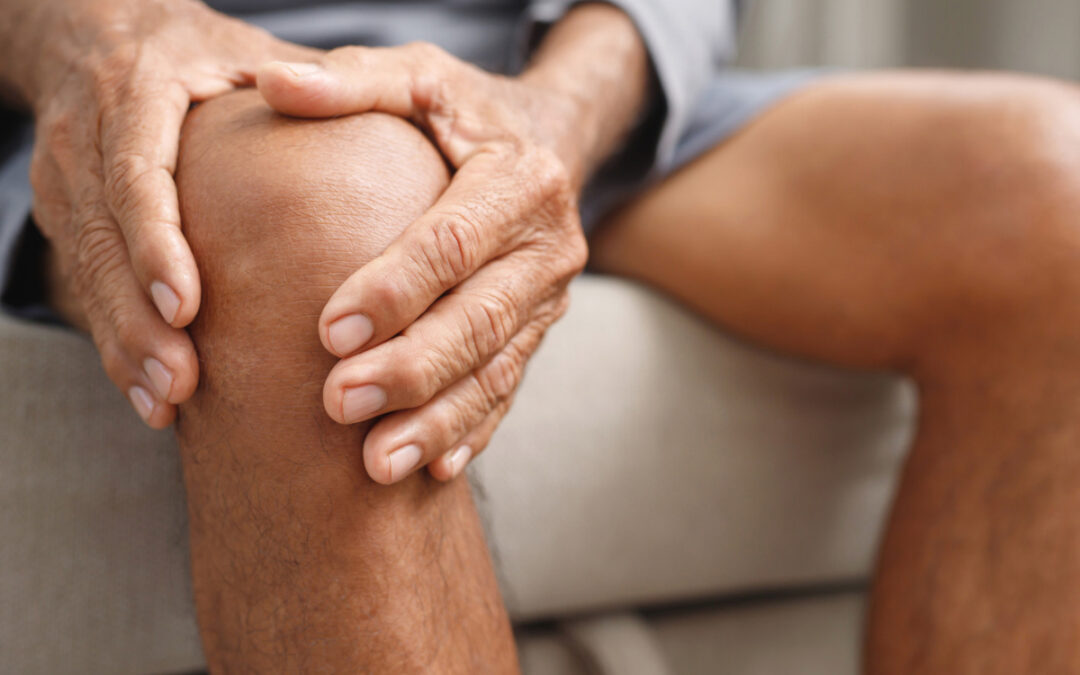
Your knees take a beating every single day. They bend and straighten thousands of times, absorb your full body weight with every step, and carry you up stairs, down hills, and through every workout and errand. So when knee pain shows up, it is hard to ignore. Whether it is a sharp catch when you stand, an ache that builds over a long walk, or stiffness that makes kneeling or squatting a chore, knee pain can quickly limit what you are able to do.
Knee pain affects people of every age and activity level, from runners and weekend athletes to busy parents and active seniors. At Premier Chiropractic Center in Bessemer, Dr. Roshun Glover helps patients across the Birmingham area understand what is behind their knee pain and find relief through gentle, whole-body care.
Understanding Your Knee
The knee is the largest joint in your body and one of the hardest working. It is where the thigh bone, shin bone, and kneecap meet, cushioned by cartilage and held together by a network of ligaments, tendons, and muscles. That design gives you both the stability to stand and the mobility to move, but it also means there are many parts that can be strained or irritated.
Just as importantly, the knee does not work alone. It sits between the hip and the ankle, so it depends on everything above and below it moving well. When the hips, pelvis, or feet are not doing their share, the knee often ends up absorbing the difference, which is a big reason knee pain is so common.
Common Causes of Knee Pain
Knee pain can come from the joint itself or from the structures and mechanics around it. Frequent causes include:
- Overuse and repetitive strain. Running, cycling, and repeated squatting or kneeling can irritate the tendons and cartilage over time, including the common pattern often called runner’s knee.
- Osteoarthritis. Gradual wear on the cartilage leads to pain, stiffness, and swelling, especially in adults over time.
- Muscle imbalances. Weak or tight muscles in the thighs, hips, and glutes leave the knee with less support, forcing it to work harder than it should.
- Injuries. A twist, awkward landing, or direct blow can strain a ligament or affect the cartilage and needs proper evaluation.
- Alignment and gait issues. Flat feet, uneven hips, or poor movement patterns change how force travels through the knee and can wear on it unevenly.
Why Knee Pain Sometimes Starts Elsewhere
One of the most useful things to understand about the knee is that it is often the victim rather than the cause. Because it sits in the middle of the chain that runs from your feet up through your pelvis and spine, a problem higher up or lower down frequently shows up as knee pain.
If your pelvis is tilted or one hip sits higher than the other, weight travels down through your legs unevenly, and one knee may take on more load than it was built for. The same happens when a foot rolls inward or an arch collapses. This is why icing and resting the knee alone sometimes brings only temporary relief. If the real driver is an imbalance in the hip, pelvis, or foot, the knee keeps absorbing the strain once you are back to your routine.
How Chiropractic Care Can Help
Chiropractic care offers a conservative, non-invasive approach to many causes of knee pain, and it is well suited to the whole-body view the knee demands. At Premier Chiropractic Center, Dr. Glover starts with a careful evaluation of the knee along with the hips, pelvis, feet, and the way you move, to find not just where it hurts but why.
From there, care is tailored to you using gentle techniques, including the Activator Method, which allows precise, low-force work on the knee and surrounding joints, along with the Thompson Technique and Diversified Adjusting. The goal is to restore proper motion and alignment through the knee and the joints that support it, ease the muscle tension around an irritated joint, and correct the imbalances that keep loading it unevenly. Dr. Glover can also suggest targeted stretches and strengthening to support your progress.
Simple Steps to Ease Knee Pain at Home
While you address the underlying cause, these everyday measures can help calm an aching knee:
- Stay active with low-impact movement like walking, swimming, or cycling rather than resting completely.
- Strengthen the muscles that support the knee, especially the quads, hamstrings, and glutes.
- Use ice for a fresh flare-up or swelling, and warmth for stiffness before activity.
- Choose supportive footwear and replace worn-out shoes that change how you walk.
- Ease back on the specific activities that sharply aggravate it while it settles, without shutting down movement entirely.
When to See a Professional
Some knee problems need prompt attention. See a provider if your knee is significantly swollen, locks or catches, gives way under you, or will not bear weight, if the pain is severe or followed a clear injury, or if it is simply not improving over a couple of weeks. Signs of infection, such as warmth, redness, and fever, call for urgent care. A proper evaluation makes sure nothing more serious is being missed.
Find Knee Pain Relief in Bessemer
Because your knees are part of nearly every step you take, lingering knee pain has a way of shrinking your activity and your day. The good news is that many causes respond well to conservative, whole-body care, especially when the real source, which is not always the knee itself, is addressed early.
If knee pain is slowing you down, Dr. Roshun Glover and the team at Premier Chiropractic Center in Bessemer are here to help you find the source and move more comfortably. Book your appointment today and take the first step toward staying active and pain-free.
Recent Comments